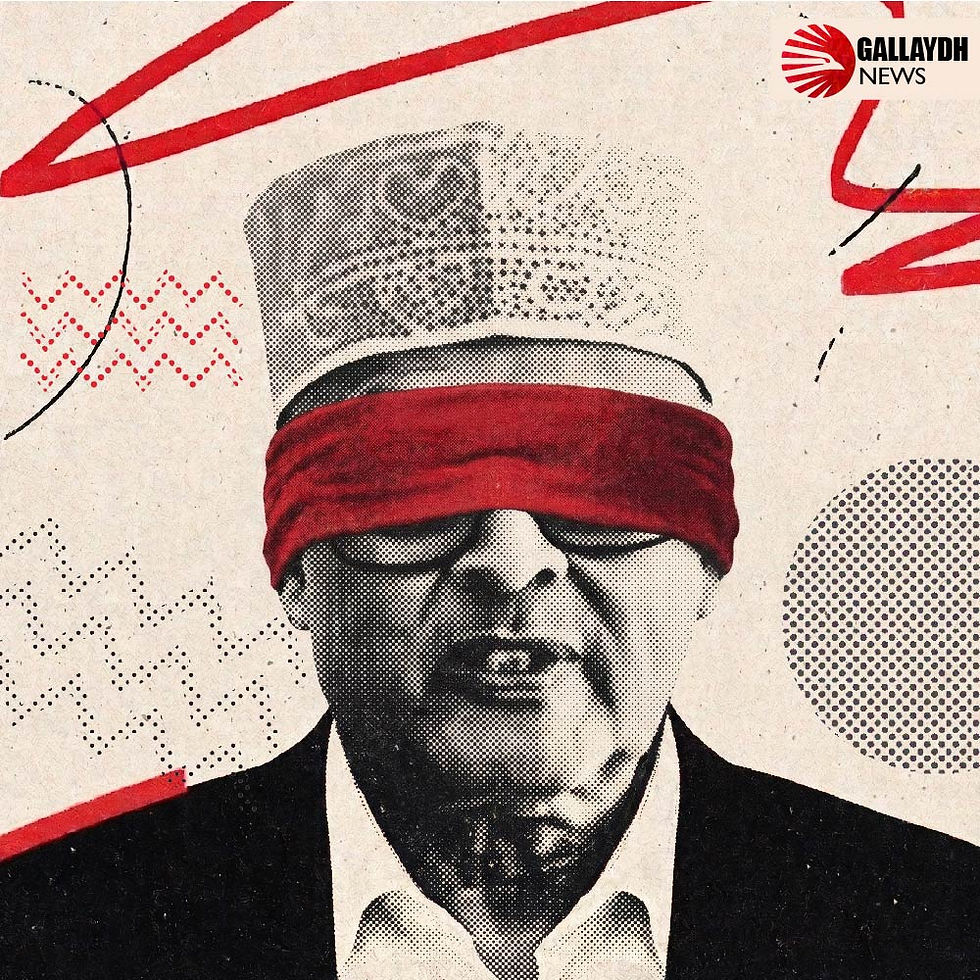
Turkey & Somalia: Strategic Partnership or Exploitation?
Strategic Partnerships and Deals that Always Seem to Give Turkey the Upper-hand
For nearly fifteen years, Turkey has built a political, economic, security, and social presence in Somalia that is far deeper and more extensive than many observers fully appreciate. This relationship is most often presented as one of “Islamic brotherhood,” “humanitarian solidarity,” and “support for state-building.” Yet when the agreements are examined closely, when the assets transferred are traced, and when the powers ceded are analyzed, a different picture emerges: a partnership that has increasingly evolved into a form of strategic exploitation, rooted in the prolonged weakness of a Somali state still struggling to recover from institutional collapse.
This article does not argue against humanitarian aid or international cooperation. The central question it seeks to answer is more fundamental and more uncomfortable: where does solidarity end, and where does the erosion of sovereignty begin?

2011: Humanitarian Relief as the Gateway to Strategic Control
In 2011, as Somalia faced a devastating famine that claimed tens of thousands of lives, Turkey became the first country whose national leader made a highly visible visit to Mogadishu. President Recep Tayyip Erdoğan’s visit broke Somalia’s international isolation and earned Turkey enormous diplomatic goodwill, built on compassion and political courage.
History, however, repeatedly shows that emergency relief can also become an entry point for long-term strategic interests.
Shortly after the humanitarian intervention, Turkey began requesting control over two of Somalia’s most critical national assets:
Management of Mogadishu International Airport
Control of the Port of Mogadishu
These two facilities constitute the economic and security lifelines of the Somali state. Their transfer to Turkish companies was justified on the grounds of efficiency, expertise, and improved security. More than a decade later, however, critical questions remain unresolved:
How much reinvestment has actually gone into expanding and modernizing the port?
How much revenue returns transparently to the Somali treasury?
Who ultimately controls financial data, operational decisions, and strategic planning?
When compared to the UAE’s investment in Berbera Port, which involved visible expansion, modern infrastructure, and a dramatic increase in capacity, Mogadishu Port appears largely unchanged from its early 2010s configuration. This contrast suggests that the Turkish model has prioritized revenue extraction over long-term strategic development.
Mogadishu Airport: Controlling the National Gateway
An international airport is not merely a transport facility. It is:
The primary gateway into a country
A core node of national security
A symbol of sovereignty and international legitimacy
When a foreign company fully controls an international airport while the host state retains only nominal authority, air sovereignty and strategic autonomy are effectively transferred by default.
Today, operational control, revenue streams, and scheduling authority at Mogadishu Airport rest not with an independent Somali state apparatus, but with a Turkish-linked entity. This arrangement weakens Somalia’s state capacity, especially given the airport’s constant use by diplomats, international organizations, and foreign military forces.
Hospitals: Public Service or Political Instrument?
Turkey has built major modern hospitals in Somalia, providing urgently needed healthcare services. This contribution is real and deserves acknowledgment.
Yet when a public service:
Operates entirely under foreign management
Remains structurally separate from national systems
Lacks a clear roadmap for capacity transfer and eventual autonomy
it risks becoming a tool of influence rather than a sustainable national institution.
The Turkish hospital in Mogadishu stands as another example of how essential services can simultaneously meet urgent needs while embedding long-term external dependency.
The Oil and Maritime Deal
In 2024, following the Ethiopia-Somaliland memorandum of understanding, Somalia entered a period of acute diplomatic vulnerability. Turkey seized this moment strategically.
Presenting itself as a defender of Somali sovereignty and a counterweight to Ethiopian influence, Turkey secured an agreement signed by President Hassan Sheikh Mohamud that:
Granted Turkey rights to explore and extract Somali oil
Gave Turkey oversight and control over Somali maritime security
Available information indicates that approximately 95 percent of the financial benefit flows to Turkey, while Somalia receives a marginal share, without the technical, legal, or institutional capacity to safeguard long-term national interests.
This agreement represents a critical turning point. Somalia effectively:
Relinquished control over natural resources
Outsourced maritime authority
Traded sovereign assets for security assurances lacking enforceable guarantees
2025 and Beyond: Expanding the Asset Hunt
As Somalia remains mired in political disputes, electoral uncertainty, and tensions surrounding Somaliland’s status, reports increasingly suggest that Turkey is seeking:
Additional ports
Mining concessions
Longer-term and broader strategic agreements
The pattern is consistent. Each moment of Somali weakness produces a new agreement. Each period of instability results in another asset transfer.
Global Comparison: Turkey Versus Other Partners
Countries such as the United States, the United Kingdom, France, the UAE, and China differ in one crucial respect:
Their assistance is not conditioned on asset seizure
They do not demand structurally one-sided agreements
Their engagement focuses on aid, training, and institutional support
Turkey has chosen a different path: support exchanged for strategic control.
Conclusion: Solidarity or Sovereign Extraction?
The question is not whether Turkey has done positive things in Somalia. It has. The deeper question is whether the price Somalia has paid exceeds the value of what it has received.
A fragile state needs partners. But genuine partnership does not require:
Surrendering ports
Losing control of airports
Handing over oil reserves
Outsourcing maritime authority
If Somalia does not urgently reassess these agreements, rebuild its legal and technical capacity, and establish protections for national assets, it risks transitioning from a “failed state” to something even more troubling: a managed state.
That is not diplomacy. It is national dispossession, formalized through contracts.