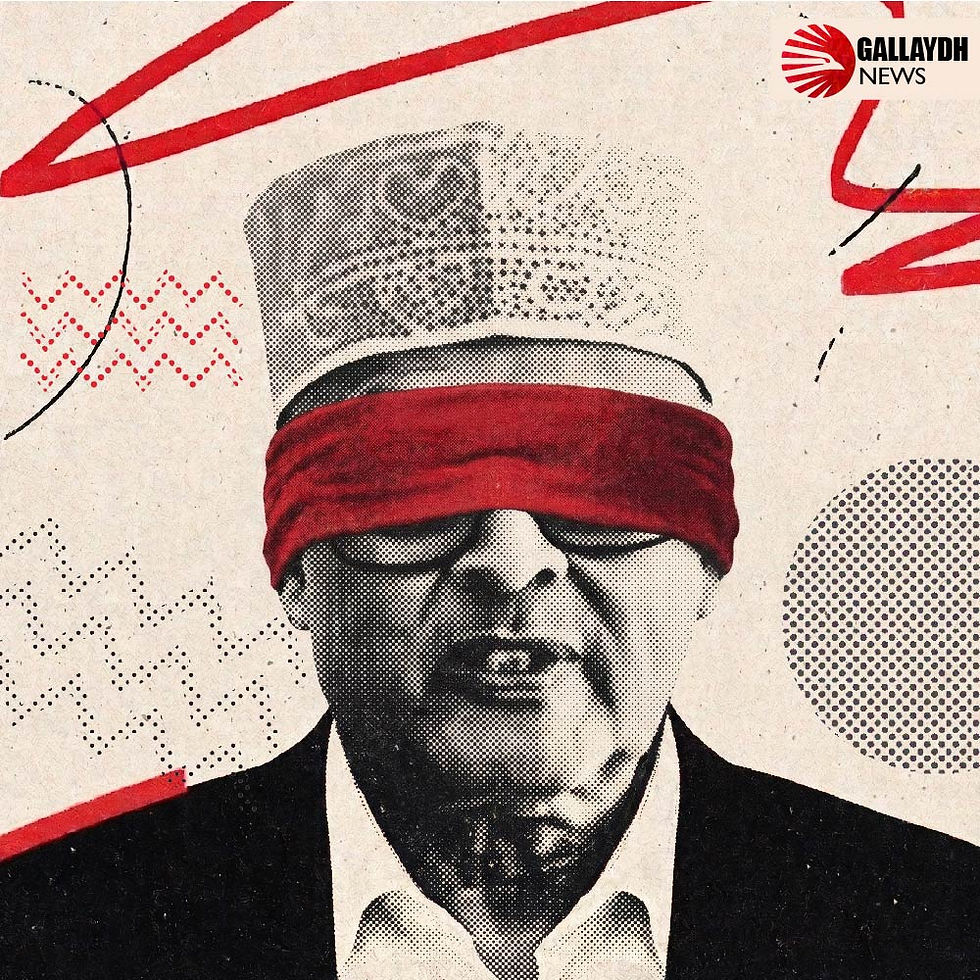
Failure of Diplomacy: Conflict in Awdal and Selel Reignites as Government Accused of "Stillborn" Peace Plan

Updated: Feb 16
BORAMA, Somaliland — Heavy fighting broke out today in parts of the Awdal and Selel regions between two brotherly clans, despite repeated claims by the Somaliland government that a peace deal had been reached. The clashes, which resulted in several casualties including both dead and wounded, erupted just hours after Minister of Interior Abdalle Mohamed Arab (Sandheere) declared that peace had finally been secured.
The situation remains volatile, with reports of armed clan militias facing off in rural areas and on the outskirts of the historic coastal city of Zeila.

Deep Dive: What Is the Real Cause of the Conflict?
This conflict is not merely a matter of traditional clan retaliation; it is rooted in deep-seated political issues and territorial disputes.
"Xeer Ciise" and Zeila: The current tension escalated in late 2025 when one clan attempted to host an event in Zeila to celebrate "Xeer Ciise" (the traditional laws of the Issa clan). This was met with fierce opposition from the other local clan, who viewed the event as a cultural claim to land ownership and an attempt to solidify exclusive territorial rights.
The Struggle for Selel Region: The two communities have long competed for administrative control over the Selel region. Portions of the local population feel the region’s governance is biased toward one side, creating a sense of political marginalization and systemic discrimination.
The Failure of Mediation: Since December 2025, the Somaliland government has dispatched various delegations to the area. While "agreements" were signed on paper, local elders believe the government has relied on "superficial peace-speak" without addressing the core obstacles to co-existence.
Mutual Blame and the Government’s Role
The Vice President of Somaliland is expected to make an emergency trip to Borama to calm the rising public anger fueled by this latest outbreak.
Opposition leaders from the Kulmiye and KAAH parties have issued stinging criticisms of the government’s handling of the peace process. Mahmoud Hashi Abdi, Chairman of the KAAH party, described the government’s plan as "stillborn"—lacking both a military buffer to separate the warring factions and a judicial system to hold those shedding blood accountable.
Traditional Council and Interior Minister: A Breakdown in Cooperation
In an urgent press release issued today, February 16, 2026, the Gadabuursi Traditional Elders Council officially announced a temporary suspension of all cooperation with Somaliland’s Minister of Interior. The council leveled several serious allegations against the Minister, citing a total breakdown of trust and neutrality:
Fabrications and Misinformation: The elders accused the Minister of blatantly misrepresenting the security situation. While the Minister publicly claimed the conflict had ended, the council highlighted that intense fighting has continued unabated over the past 48 hours.
Insults Toward Traditional Leadership: The council expressed outrage over the Minister’s characterization of traditional elders as "warmongers" (dagaal-oogayaal) who oppose peace. They described these remarks as an affront to the dignity of the state and an attack on the vital role of traditional institutions in Somaliland’s stability.
Distortion of Facts on Border Security: The council claims the Minister is intentionally ignoring the presence of foreign insurgent forces. While the Minister insisted that the borders are closed and secure, the elders asserted they possess identification documents from foreign combatants killed in the recent clashes, proving that the borders remain porous and compromised.
The council concluded by stating that the Minister has "stepped outside the boundaries of governance" and lost the impartiality required for his office, leading to their decision to sever ties until further notice.
Geopolitical Impact and Regional Security
The conflict in western Somaliland is no longer just a local issue; it has attracted the attention of neighboring states:
Ethiopia and Djibouti: Because the clans fighting in Awdal and Selel share borders with these two nations, there is a growing concern that the violence could spill over international boundaries.
Red Sea Security: The Awdal region is vital to trade corridors and port projects that Ethiopia is keenly interested in. This makes the stability of this region a strategic necessity for the security of the Horn of Africa.
The Path to a Solution
To end the bloodshed between brothers in Awdal, local intellectuals and elders have proposed the following:
Immediate Deployment: The urgent deployment of neutral national security forces to create a buffer zone between militias.
Independent Peace Conference: Convening a grand peace summit led by traditional elders who are free from political influence.
Land Dispute Resolution: Reaching a lasting settlement on the ownership disputes in Zeila and the Guban plains.
The Awdal and Selel conflict today represents a major test for the statehood and the celebrated peace of Somaliland. It is becoming increasingly clear that "peace in words" is not enough to extinguish a fire that has been smoldering since late 2025.