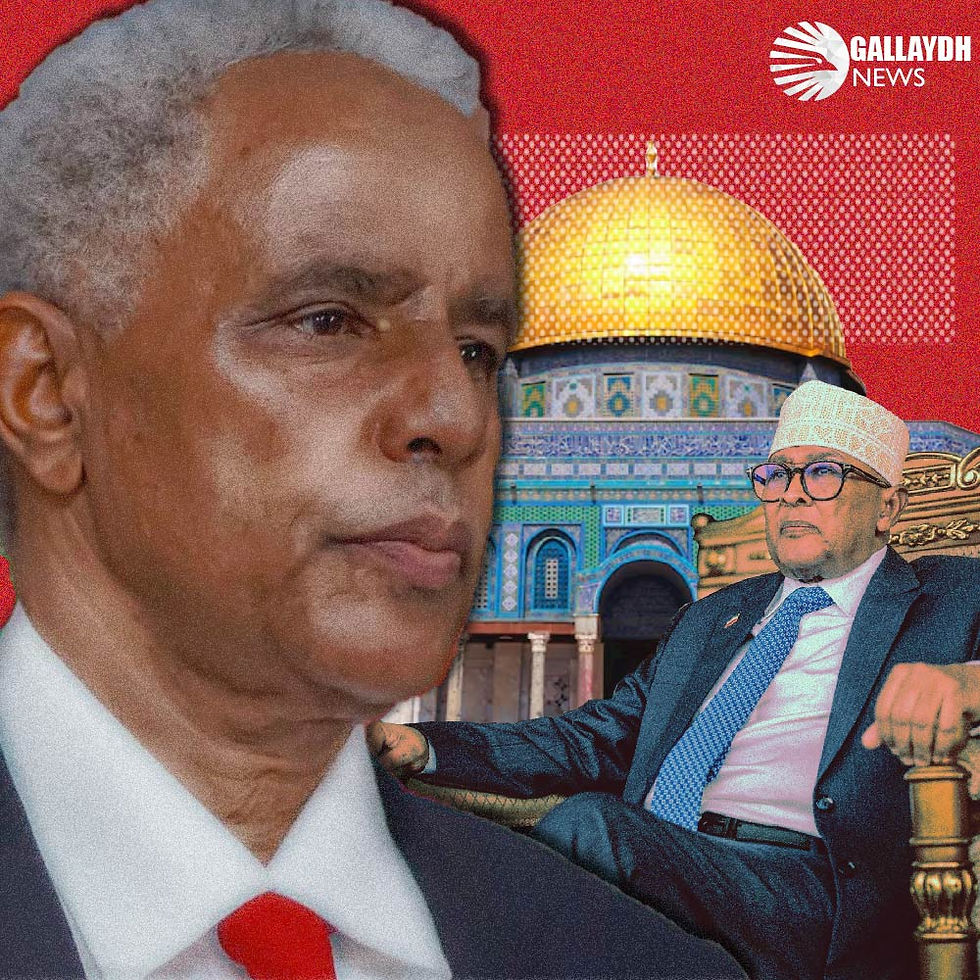
Unmasking the Union: Somaliland’s Legal Reality
- Mustafe Yusuf Jambir

- Feb 4
- 2 min read
Revisiting Paolo Contini’s The Somali Republic: An Experiment in Legal Integration
Original Author: Mustafe Yusuf Jambir
Original Publication: The Times of Israel – Blogs
Date: FEB 3, 2026

Curated Excerpt (Fair Use)
In this opening article of a planned analytical series, Mustafe Yusuf Jambir revisits Paolo Contini’s 1969 book The Somali Republic: An Experiment in Legal Integration to reassess the legal foundations of the 1960 union between British Somaliland and Italian Somalia.
Contini, an Italian jurist who served as a legal advisor to the Somali government and worked closely with international institutions, documented the immense legal challenges of merging two distinct colonial systems: British common law in Somaliland and Italian civil law in Somalia. His analysis reveals that the so-called “union” was never formalized through a binding Act of Union nor properly ratified by both legislatures.
Rather than a legally consolidated state, Contini described the Somali Republic as an improvised political arrangement, plagued by unresolved constitutional contradictions. The absence of a valid legal framework meant that sovereignty was never fully transferred under international law.
From this perspective, the author argues that Somaliland’s 1991 declaration was not an act of secession, but a restoration of sovereignty following the collapse of an unratified and legally incomplete union. The article positions Contini’s work as inadvertent legal testimony supporting Somaliland’s claim, emphasizing that the “experiment in legal integration” ultimately failed on its own terms.
About the Author
Mustafe Yusuf Jambir is a Somaliland-based researcher specializing in geopolitics, foreign relations, governance, and development policy, with a focus on the Horn of Africa. His work combines political analysis, policy research, and writing on Somali identity, leadership, and state-building.
This is a curated article from an external publication. All views expressed belong to the original author. Gallaydh.com curates external work to encourage informed discussion and critical engagement.