Decoding Somaliland's Decision to Open an Embassy in Jerusalem

Somaliland's recent move to open an embassy in Jerusalem has sent shockwaves through the diplomatic corridors of the Horn of Africa and the Middle East. By taking this step, Somaliland officially recognizes Jerusalem as the capital of Israel, diverging from the overwhelming global consensus that favors Tel Aviv. Observers and critics alike are asking why an unrecognized, Muslim majority nation would take such a deeply sensitive step that even major global powers actively avoid.
Despite the inevitable criticism, a closer examination of Somaliland's foreign policy, its desperate quest for international recognition, and the shifting dynamics of global alliances reveals a bold strategy grounded in pure realpolitik. This article explores the international law surrounding Jerusalem, draws crucial parallels between Somaliland and Kosovo, and unpacks the ultimate justification for this historic geopolitical maneuver.

Did Somaliland Violate International Law? Understanding the Jerusalem Dilemma
The most common question raised by the public and political analysts is whether Somaliland's decision violated international law. To understand this, one must separate diplomatic boycotts from territorial legal violations. The short answer is no, Somaliland did not break international law.
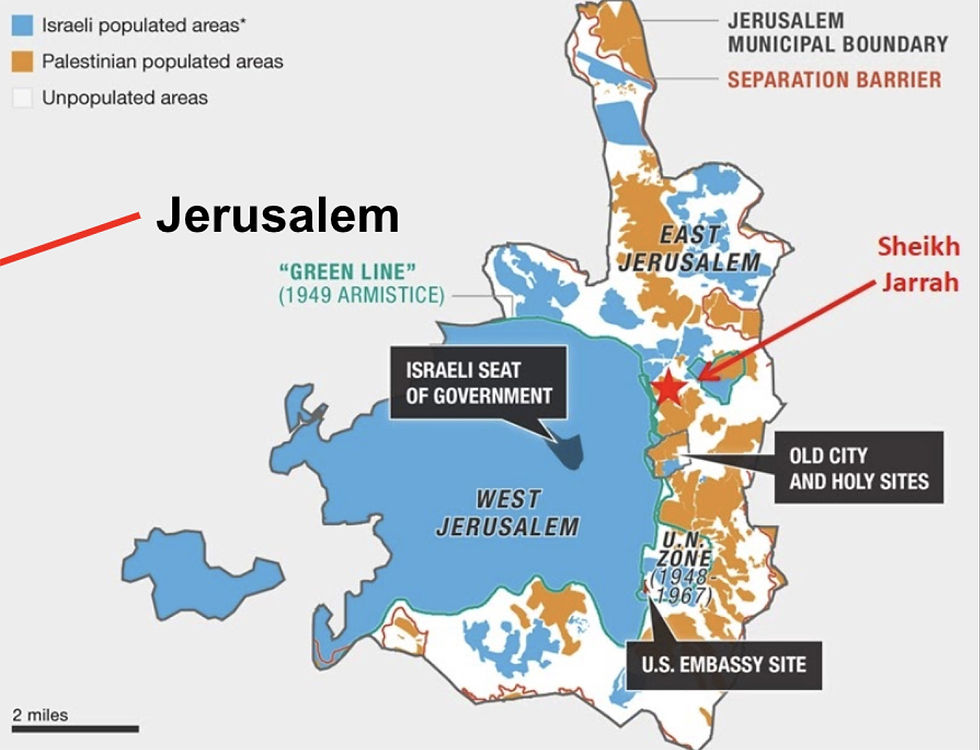
Under international law, West Jerusalem has been recognized as sovereign Israeli territory since 1948. Therefore, placing an embassy in the western sector does not inherently violate international territorial laws. However, the global dispute over Jerusalem is fundamentally diplomatic and political, rooted in several highly sensitive complications:
1. The 1980 Undivided City Law: The 1993 Oslo Accords and standard international frameworks for a two state solution envision West Jerusalem as the Israeli capital and East Jerusalem as the capital of a future Palestinian state. In 1980, however, the Israeli parliament passed the Jerusalem Law, declaring the complete and undivided city as its eternal capital. Because Israel refuses to legally separate the west from the east, foreign nations fear that opening an embassy anywhere in Jerusalem implicitly endorses the illegal unilateral annexation of East Jerusalem.
2. Prejudging the Peace Process: Retaining embassies in Tel Aviv has long served as a neutral diplomatic holding pattern to preserve the possibility of peace negotiations between Israelis and Palestinians. The United Nations and the European Union maintain that recognizing Jerusalem before a final, comprehensive peace treaty is signed essentially prejudges the most contentious issue of the conflict, thereby destroying the neutrality required for mediation.
3. United Nations Resolutions: The original 1947 UN Partition Plan (Resolution 181) designated Jerusalem as a "corpus separatum", a separate entity managed internationally due to its profound religious significance to Muslims, Christians, and Jews. Following Israel's declaration of Jerusalem as its undivided capital, the UN Security Council passed Resolution 478 in 1980, explicitly demanding that all member states withdraw their diplomatic missions from the city.
4. Regional Stability: Most of the international community avoids Jerusalem to maintain stable diplomatic, economic, and trade ties with Arab and Islamic nations. Relocating an embassy often triggers mass protests and security threats across the Middle East, leading most nations to prioritize regional stability over symbolic diplomatic moves.
Who Else Has an Embassy in Jerusalem?
Somaliland is not entirely alone on this new diplomatic path. Currently, eight countries maintain full embassies in Jerusalem. The United States led the modern wave, followed by Guatemala, Honduras, Kosovo, Papua New Guinea, Fiji, Paraguay, and now the Republic of Somaliland.
This number is expected to grow in the coming years. Countries like Argentina, the Czech Republic, and Samoa have officially announced their intentions to relocate their embassies. In 2025, Argentine President Javier Milei declared his plan to move his country's embassy from Tel Aviv, aligning South America's second largest nation with this shifting diplomatic bloc. Meanwhile, major European powers like the United Kingdom, France, and Spain maintain consulates in Jerusalem strictly to manage Palestinian affairs, keeping their main embassies in Tel Aviv.
Other nations have taken more nuanced approaches. Australia recognized West Jerusalem as Israel's capital in 2018 but officially reversed the decision in 2022 to realign with the global consensus. Conversely, Russia formally recognized West Jerusalem as the Israeli capital, but explicitly conditioned this recognition on the absolute premise that East Jerusalem must become the capital of a future Palestinian state.
The Kosovo Parallel: Breaking the Siege of Diplomatic Isolation
To fully grasp Somaliland's rationale, one must deeply analyze the case of Kosovo, another Muslim majority nation that thirsted for full international recognition. Somaliland's current trajectory closely mirrors the path forged by Kosovo just a few years prior.
Kosovo recognized Jerusalem as Israel's capital in a direct quid pro quo arrangement to secure Israel's formal recognition of Kosovo's independence. This historic milestone was born out of the trilateral Washington Agreement brokered by the United States in September 2020. While the summit was ostensibly aimed at normalizing economic relations between Kosovo and Serbia, the US administration utilized the opportunity to insert clauses compelling Kosovo to establish diplomatic ties with Israel and recognize Jerusalem.
Kosovo unilaterally declared its independence in 2008. Although it was quickly recognized by numerous Western nations, it faced a severe diplomatic blockade spearheaded by Russia, China, and several European Union states, which effectively denied Kosovo a seat at the United Nations. Historically, Israel had also refused to recognize Kosovo, fearing that such a move would set a dangerous legal precedent for unilateral Palestinian statehood.
Shattering this political isolation by securing recognition from an influential global power like Israel was a monumental diplomatic victory that breathed new life into Kosovo's struggle. To achieve this, Kosovo made an unprecedented compromise. It chose to bypass the established global consensus regarding the Israeli and Palestinian conflict. When Kosovo officially opened its embassy in Jerusalem in March 2021, it became the first European country and the first Muslim majority territory to do so. It prioritized its own existential need for sovereignty over traditional diplomatic customs.
A Difficult but Calculated National Interest
Somaliland finds itself in an identical geopolitical predicament. For over 35 years, Somaliland has built a democratic, secure, and functioning state that meets all the criteria for statehood. Yet, the international community, particularly the Arab and Islamic nations that Somaliland has historically respected and courted, has offered nothing in the way of full recognition, choosing instead to protect their diplomatic interests with Mogadishu.
Viewed through the harsh lens of recognition politics, Somaliland's decision to open an embassy in Jerusalem is rooted in stark pragmatism. Much like Kosovo, Somaliland has placed the realization of its own independence above all else. The Israeli government possesses immense diplomatic leverage, particularly within Washington and across Western capitals, which could unlock doors that have remained firmly shut to Hargeisa for decades.
The brutal reality of state building and the quest for international recognition often forces governments to make difficult, audacious decisions. Somaliland is not acting out of hostility toward the Palestinian people. Rather, it has made a calculated choice based purely on its own national survival, much like the Arab nations that signed the Abraham Accords to prioritize their economic and security interests over traditional allegiances. Somaliland has proven that it is ready to forge strategic alliances that serve the destiny of its people, elevating its national interest above the conventional rules of global diplomacy. This decision signals a new era for Somaliland, operating on the global chessboard as an independent nation that knows exactly where its interests lie.