A Crisis of Compassion: How Somaliland's Health Minister Turned Vulnerable Patients into a Political Firestorm

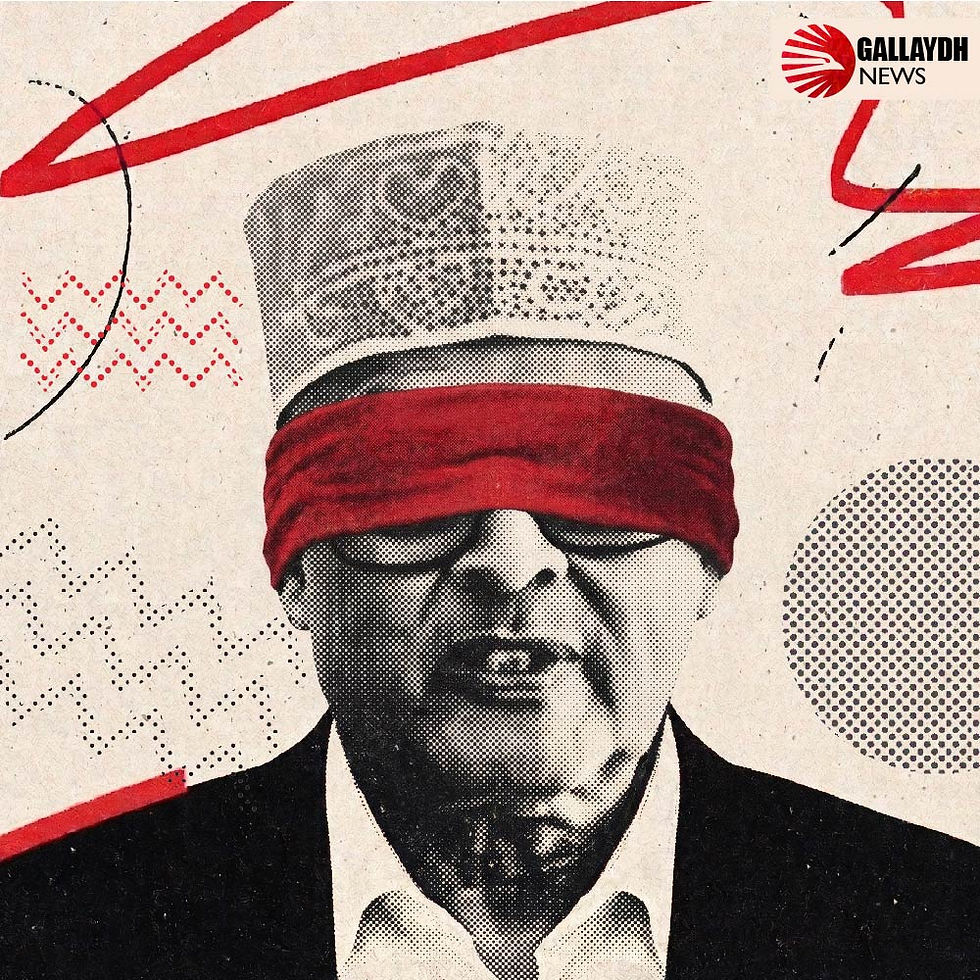
HARGEISA – Over the past few days, the capital city of Hargeisa has witnessed a rapid sequence of events that has laid bare significant flaws in the political conduct and public relations strategies of Somaliland’s senior cabinet members. Dr. Hussein Bashir Hirsi, the Minister of Health, has once again plunged himself into a profound social and political scandal. Following an agonizing public protest by kidney dialysis patients, the Minister chose to hurl bizarre accusations at the vulnerable group rather than address their plight. His callous reaction triggered widespread public outrage, ultimately forcing President Abdirahman Mohamed Abdullahi (Cirro) to urgently intervene and extinguish the political fire ignited by his own minister.

Desperate Pleas Met with Defensiveness
On July 29, 2026, hundreds of patients suffering from end-stage renal disease staged a peaceful protest outside the Presidential Palace and the House of Representatives in Hargeisa. With faces marked by exhaustion and deteriorating health, the demonstrators voiced their desperation over a lack of medical equipment, exorbitant medication costs, and the severe inadequacy of dialysis services at the Hargeisa Group Hospital.
The patients detailed a system stretched far beyond its capacity. Speaking to the media, one protester articulated the grim reality of their situation.
"We are being wronged here," the patient explained. "I need to be on that dialysis machine for three days a week, but I only get a day and a half. I am being deprived of life-saving treatment."
Instead of extending empathy or offering an immediate administrative solution, Dr. Hussein Bashir Hirsi opted for a verbal offensive. Addressing the press, the Minister stubbornly maintained that kidney dialysis services are provided free of charge and dismissed the desperate pleas of the sick as a coordinated political conspiracy.
"These protests are organized and pushed by foreign elements and outsiders," the Minister claimed.
He went on to allege that local journalists and poets were orchestrating the protests to destabilize the country, incite the public, and intentionally tarnish the government's reputation.
A Deeply Hurt Community and an Opportunistic Opposition
The Minister’s remarks struck a devastating blow to a community already fighting for survival. The chairman of the dialysis patients advocacy group, who is also a patient himself, delivered a deeply emotional rebuttal to the Minister's allegations.
"He is telling sick people who are fighting for their very lives that someone sent them as political agents," the chairman stated. "We are deeply saddened that our Minister of Health, the man entrusted with our lives under God, spoke to us like a mere politician."
Reminding the public that illness does not discriminate, the chairman added a heartbreaking perspective.
"We are deeply hurt by his mockery and his boasting about his own health. It is a violation of human conscience. We were just like him yesterday. We were healthy, but God took it away and placed us under his care. We sat down with him previously to explain our urgent needs, both positive and negative. For him to come out today and say we are foreign pawns is truly devastating."
This profound lapse in responsibility handed Somaliland’s political opposition a golden opportunity. The Kaah and Kulmiye opposition parties immediately capitalized on the government’s blunder. Their leaders issued strong condemnations of the Minister’s rhetoric and swiftly donated dialysis machines to the hospital, effectively positioning themselves as the true champions of the people. This tactical move placed immense political pressure on the ruling administration and exposed the Ministry of Health's communication failures to the entire nation.
The President as the "Chief Firefighter"
A day after the protests and the Minister’s abrasive remarks, President Cirro felt the immense weight of the escalating crisis. In the early hours of July 30, 2026, the President made an urgent, unannounced visit to the dialysis ward at the Hargeisa Group Hospital.
Acting as the nation's chief firefighter, President Cirro personally greeted the patients one by one, listening to their grievances in an effort to de-escalate the tension. He promised sweeping and immediate changes, assuring the patients that his government would procure additional dialysis machines and vital medications.
While the President’s visit demonstrated his willingness to confront the suffering of his citizens, political analysts note a troubling trend. The President is increasingly finding himself in the position of cleaning up the prejudiced rhetoric and administrative missteps of his cabinet members. Tellingly, during the regular Cabinet meeting held on July 29, the crisis facing the dialysis patients was not even placed on the agenda. This glaring omission highlights a severe disconnect between the immediate needs of the public and the priorities of the executive cabinet, leaving the President to manage the fallout alone.
A Troubling Pattern: The Tragedy of Najma
The current public relations disaster surrounding Dr. Hussein Bashir is not an isolated incident. This marks the second time in a short period that the Minister has courted massive controversy due to poor media management and impulsive reactions.
In January 2026, a young girl named Najma tragically died during surgery at the Hargeisa Group Hospital. Her grieving family publicly alleged medical malpractice. Rather than launching an immediate, transparent investigation, the Minister of Health convened an intimidating press conference alongside the Head of the CID, the Minister of Justice, the Minister of Religion, and the Director of Health Professionals.
During the broadcast, the officials threatened the family and the public, dismissing the allegations as baseless propaganda. "Somaliland doctors live in difficult circumstances," the Minister argued at the time. "While these conditions exist, we will not accept them being insulted."
The aggressive posturing of these state officials toward a grieving family sparked fierce public backlash. The government was widely condemned for acting like a syndicate of bullies rather than public servants. The ensuing outrage ultimately forced the Minister of Health into a humiliating retreat. He issued a comprehensive public apology, promised justice for Najma, and appointed an independent committee to investigate the hospital's surgical practices.
A System in Desperate Need of Reform
The recurring missteps of the Minister of Health reveal a fundamental lack of public relations acumen and the critical thinking expected of a national leader. Dr. Hussein Bashir is the Minister of Health for the entire Republic of Somaliland, not a defensive ward administrator. There is no strategic justification for him to rush to a microphone to launch defensive counterattacks whenever a crisis arises. Such localized grievances could easily be managed by hospital administration or the Ministry's Director General.
Somaliland’s healthcare system requires genuine administrative reform, modern equipment procurement, and professional training. The Minister’s time would be vastly better spent securing international medical investments, crafting comprehensive care policies, and upgrading hospital infrastructure. Instead, he expends his energy engaging in rhetorical combat with patients clinging to life on dialysis machines or families mourning the loss of their children.
As public scrutiny intensifies, all eyes remain on the Presidential Palace. The lingering question for President Cirro is clear. How much longer will he tolerate a cabinet minister whose penchant for the microphone continuously manufactures political crises and damages the credibility of the entire administration?