Berbera's Political Crisis: Somaliland Government Blocks Mayoral Ouster

BERBERA (July 15, 2026) The port city of Berbera stands as the undisputed economic beating heart of the Republic of Somaliland. Yet today, this vital commercial artery is suffocating under the weight of a severe political crisis. A fierce power struggle within the Local Council has completely paralyzed the municipal administration of the Sahil region. The epicenter of local governance has effectively relocated from Berbera to the luxury hotels of Hargeisa, where a high stakes political chess match is currently unfolding.
Since July 10, internal council frictions have reached a boiling point. A formidable majority bloc of local councilors publicly declared their intent to strip Abdishakur Mohamud Hassan, widely known as Ciddin, of his mayoral title. Mayor Iddin has maintained an iron grip on the city's leadership since 2012, making him one of the longest serving municipal leaders in the country.

Factional Warfare and Midnight Maneuvers
The campaign to unseat the veteran mayor is spearheaded by Councilor Mohamed Ibrahim Dable. Dable is a highly influential businessman who has long harbored ambitions for the mayoral office. In a bold tactical maneuver, he housed eight local councilors in a hotel in southern Hargeisa. This absolute majority bloc unified behind a single objective: to execute a motion of no confidence against Iddin and install Dable as the new mayor of Berbera.
Sensing the walls closing in, Mayor Iddin embarked on a midnight journey to the capital to seek political sanctuary. He immediately secured high level meetings at the Somaliland Presidency. Insider reports confirm that the mayor successfully extracted a presidential guarantee that he would not be forcibly removed from office, ensuring the full defensive weight of the executive branch.
To further fortify his position, Mayor Iddin forged a strategic alliance with Councilor Abdirashid Mohamed Yusuf, known as Dhukur. Dhukur is another prominent figure who desires the mayoral seat. Recognizing the immediate threat posed by Dable's majority, Dhukur opted to shield the incumbent mayor. Together, they constructed a formidable political barricade against the rebel councilors holed up in the Hargeisa hotel.
The Ruling Party's Dilemma
This local dispute has metastasized into a major headache for the ruling WADDANI party. The core of the dilemma lies in the shifting political allegiances leading up to the national elections.
During the 2021 local council elections, Dable secured his seat through the opposition UCID ticket, while Dhukur ran under the KULMIYE banner. However, both politicians pragmatically defected to the WADDANI party during the presidential campaign season. Dhukur officially joined WADDANI in June 2024 and was swiftly appointed as a Deputy Chairman of the party in July 2024. Conversely, Dable joined the party in September 2024 and launched a grassroots mobilization campaign for WADDANI.
This dynamic has trapped the Presidency in an impossible situation. If the administration permits the ouster of Mayor Iddin, it will be forced to choose between two of its own stalwarts. Dhukur holds a prestigious party title but lacks the council votes. Dable holds no senior party title but commands the eight votes required to take the mayoralty. To avoid a catastrophic internal party schism, the Presidency opted to defend Mayor Iddin and preserve the status quo. Iddin himself reportedly prefers a scenario where he resigns on his own terms and personally handpicks his successor.
Executive Overreach and Legal Gridlock
On the legal front, the majority councilors formally submitted articles of impeachment to the mayor. According to Somaliland's Local Government Law, a sitting mayor has exactly three days to formally respond to such allegations. That statutory window expired with absolute silence from Abdishakur Iddin.
Following the expiration of the legal deadline, the councilors forwarded the procedural paperwork to the Governor of the Sahil Region and the Ministry of Interior. In a blatant display of executive intervention, the Central Government outright refused to authorize the extraordinary session required to unseat the mayor. The state argued that the allegations brought against Mayor Iddin were unconvincing. This move effectively vetoed the motion and demonstrated a direct central government override of elected local democratic institutions.
A City Left in the Dark
While politicians and councilors engage in fierce negotiations within the air conditioned hotels of Hargeisa, the ordinary citizens of Berbera are enduring a severe humanitarian and service delivery crisis. As the hottest city in the country navigates the peak of summer, residents are suffering from chronic water shortages and a crippled power grid that threatens public health and safety.
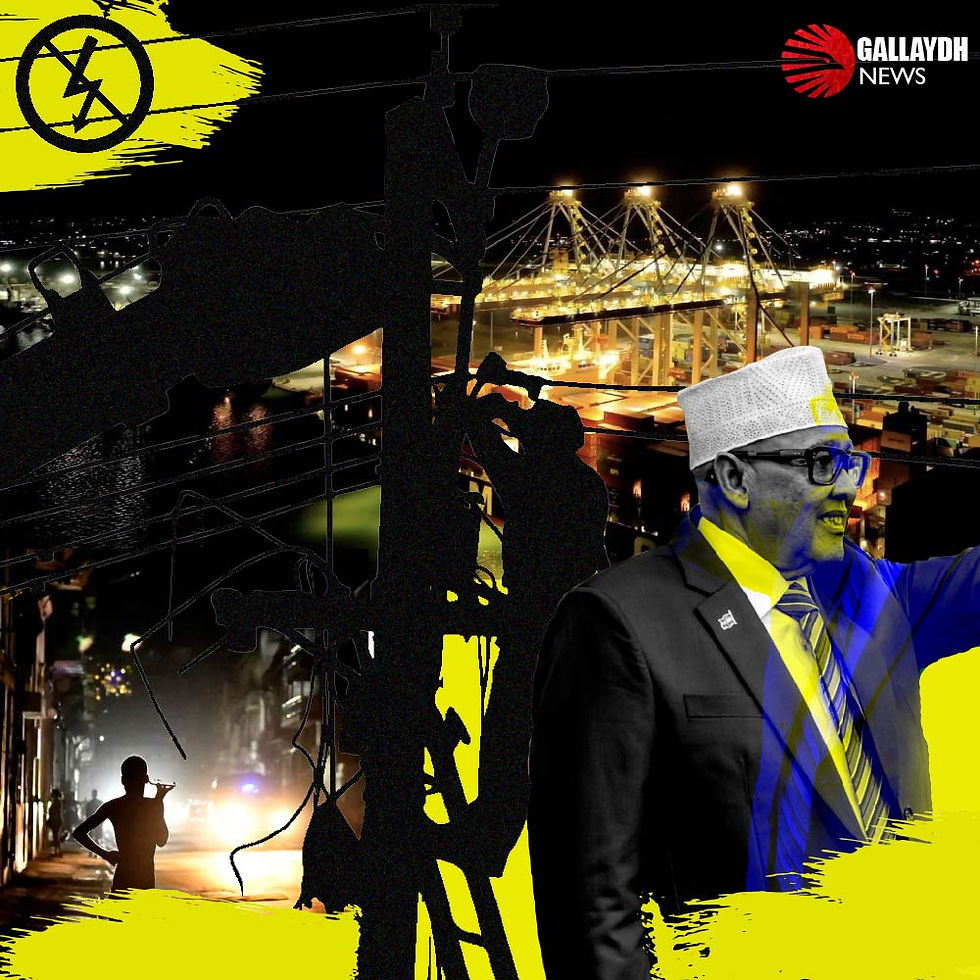
Last night, the entire city of Berbera was plunged into a total blackout. Residents remain desperate for basic electricity required to power cooling units and safely store essential medicines and perishable food.
Ultimately, the Berbera Local Council crisis serves as a glaring example of how elite power struggles and party mathematics frequently override the public interest. The government's decision to freeze local democratic processes to protect a political ally only deepens public distrust. Meanwhile, the citizens of Somaliland's economic powerhouse are left waiting in the dark.