


Berbera's Chronic Power Crisis and the $24 Million Promise of Green Energy

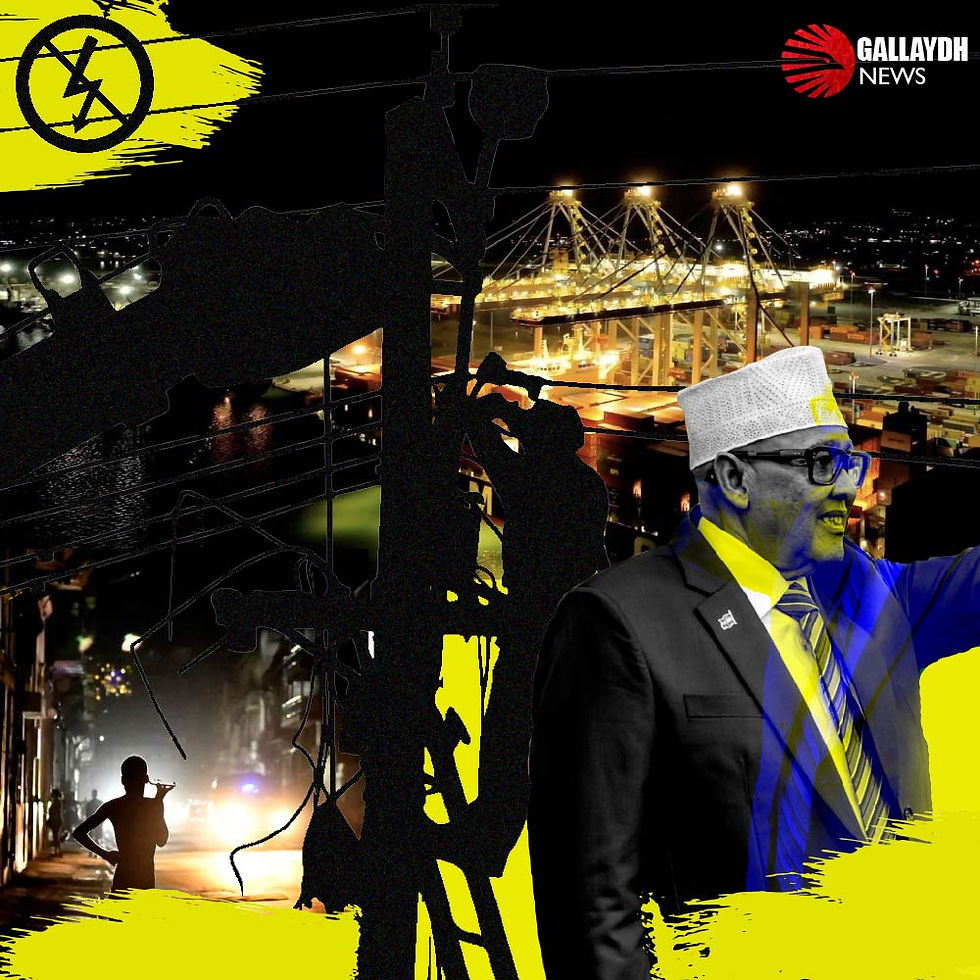
The coastal city of Berbera is the undisputed economic heart of the Republic of Somaliland and a vital logistical artery feeding the broader Horn of Africa. Following massive infrastructure investments by Dubai-based logistics giant DP World, the city's port has transformed into a globally recognized commercial hub. Yet, beneath the glittering facade of international maritime trade lies a stark and debilitating reality for local residents: a chronic, unresolved electricity crisis that plunges the city into darkness every night.
During the punishing summer months, when temperatures in Berbera routinely soar, electricity is not merely a modern convenience; it is a fundamental metric of public health and human survival. Public outcry over the frequent power outages has reached a fever pitch, with social media platforms flooded nightly by residents documenting the agonizing heat and the devastating impact of the blackout on their daily lives.
The Human Toll and the Paradox of Progress
The consequences of this energy deficit extend far beyond darkened living rooms; they are a matter of life and death. When the power grid fails at night, maternity wards and households are left without functioning fans or air conditioning. The most severe risks are borne by newborns who rely on oxygen machines and incubators. In the sweltering coastal heat, the lack of ventilation can trigger respiratory failure in both mothers and infants, creating a perpetual, entirely preventable humanitarian crisis.
The economic fallout is equally severe. Small and medium sized enterprises (SMEs) are effectively paralyzed. Local merchants who cannot afford the exorbitant cost of running heavy duty diesel generators face crippling daily losses as perishables spoil and productivity halts.
This dynamic creates a glaring paradox of uneven development. The modernized port facilities and the newly established Berbera Economic Free Zone consume massive, uninterrupted loads of electricity. Meanwhile, the ordinary, taxpaying citizens living just beyond the port gates are left to navigate a grueling combination of chronic blackouts and predatory energy pricing.
The BEC Monopoly and Regulatory Failure
Berbera’s power crisis is not simply a symptom of inadequate generation capacity; it is fundamentally a crisis of market structure and regulatory neglect. In the capital city of Hargeisa, a relatively open market allows at least four major energy providers to compete for consumers. This competition, while imperfect, has forced a baseline standard of reliability and competitive pricing.
Conversely, the energy market in Berbera is entirely dominated by a single private entity: the Berbera Electricity Company (BEC). Successive Somaliland administrations have largely abandoned the energy sector to its own devices, failing to establish robust state regulatory frameworks to govern service quality or pricing. This unchecked monopoly grants BEC absolute authority to dictate load shedding schedules without fear of market competition or government reprisal.
Political Promises and the Burden of the Presidency
The escalating crisis has placed immense political pressure on the newly elected administration. President Abdirahman Mohamed Abdullahi (Cirro) shares deep, historical ties with the region. From his election as a Member of Parliament representing the Sahil region in 2005 to his recent presidential campaign, resolving Berbera’s power crisis has been a central pillar of his political platform.
However, the administration’s interventions thus far have been superficial, focusing primarily on capping consumer tariffs rather than addressing the root cause of the blackouts. For the residents of Berbera, the cost of electricity is secondary to its availability. Citizens have made it clear they are willing to pay for power, provided it is reliable enough to run essential cooling systems and support daily commerce. The government’s current policy framework has yet to deliver a tangible increase in grid up-time.
The "Green Berbera" Initiative
Amidst the growing public frustration, significant structural shifts in the city's energy infrastructure are offering a renewed sense of hope. Global South Utilities (GSU), an Abu Dhabi-based energy infrastructure developer, recently acquired a 45% stake in the Berbera Electricity Company. This acquisition is the cornerstone of the "Green Berbera" initiative, a comprehensive strategy aimed at transitioning the city's power grid away from heavy diesel reliance toward a sustainable, renewable energy model.
In February 2026, GSU successfully completed the first phase of this transition, inaugurating a 5 Megawatt (MWp) grid-connected solar photovoltaic (PV) plant, supported by 11.2 kilometers of new 33-kV transmission lines. This facility now supplies clean electricity equivalent to the annual consumption of 28,000 households, offsetting approximately 6,890 metric tonnes of CO2 emissions annually.
However, solar generation alone cannot solve Berbera's nocturnal crisis; when the sun sets, consumer demand peaks just as generation drops to zero.
To bridge this critical gap, Somaliland's Minister of Energy and Minerals, Eng. Ahmed Jama Barre, officially launched a highly anticipated $24 million renewable energy project on May 25, 2026. Financed by GSU, this second phase represents the definitive infrastructural leap the city requires. The project encompasses two vital components:
A massive 12 MWp solar power expansion.
A state of the art 70 Megawatt-hour (MWh) Battery Energy Storage System (BESS).
The Road Ahead
The integration of the 70 MWh battery storage facility is the linchpin of the Green Berbera strategy. It is designed to capture and store excess solar energy generated during the day and dispatch it during the peak evening hours. Once fully operational, this hybrid system is projected to double BEC's renewable capacity by 2027, enabling the utility to provide uninterrupted power to approximately 67,000 households and fully supply the Berbera Economic Zone.
The pressing question for the residents of Berbera, the executives at BEC, and the administration of President Cirro remains: When will these high-level financial investments and political promises translate into reliable light in the homes of everyday citizens? Until the grid stabilizes, the people of Berbera are left waiting in the sweltering heat, watching millions in international capital flow through their port while their most basic infrastructural needs remain unfulfilled.


