


Capitulation: How Federal Pressure and the Southwest Precedent Forced Qoorqoor’s Exit in Galmudug

DHUSAMAREB The administrative capital of Galmudug State, Dhusamareb, has become the center of a seismic political realignment in Somalia. Outgoing regional President Ahmed Abdi Kariye, widely known as Qoorqoor, has officially announced his withdrawal from the upcoming state presidential race. This unexpected capitulation effectively brings an end to his six year tenure as Galmudug’s supreme leader, a reign that began in February 2020 during the administration of former federal President Mohamed Abdullahi Farmaajo.
This analytical brief explores the true underlying mechanics behind Qoorqoor's sudden withdrawal, the intense pressure applied by the federal government in Mogadishu, the chilling precedent set by the violent ouster of Southwest State's leadership, and the long term implications for Galmudug's political horizon.
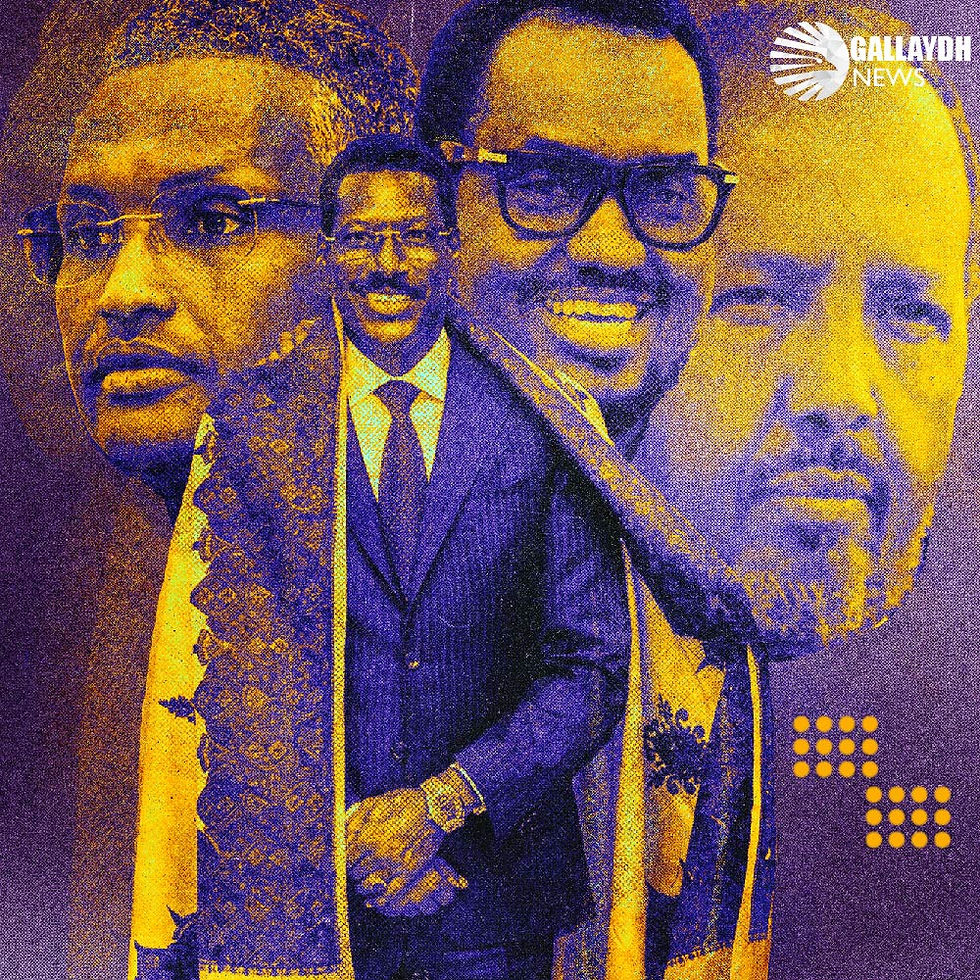
The Public Announcement: A Message of Continuity
President Qoorqoor chose a highly symbolic backdrop to declare his exit, delivering the news during a mass public gathering commemorating national Independence Day on June 26. Addressing hundreds of citizens and local officials, he sought to frame his departure as a calculated, selfless act aimed at preserving regional peace.
"I have decided to withdraw from the current electoral process," Qoorqoor announced. "However, I will continue to hold office until this process is fully concluded to ensure the institutional continuity of the state administration."
The outgoing leader emphasized his absolute support for the right of Galmudug's citizens to peacefully elect their next government, pledging seamless cooperation with whoever emerges victorious. He concluded his speech with a strong call for regional solidarity, stability, and development, warning that political division would only invite regression.
Behind the Scenes: The Invisible Hand of Villa Somalia
While Qoorqoor’s public address painted a picture of a dignified, voluntary departure, seasoned political analysts and intelligence insiders reveal a starkly different reality. His withdrawal was the direct result of an aggressive, months long political chokehold engineered by the Federal Government of Somalia.
High ranking federal powerbrokers, most notably federal Prime Minister Hamza Abdi Barre and the powerful Director of the National Intelligence and Security Agency (NISA), Mahad Mohamed Salad, had recently established a heavy, continuous presence in Dhusamareb. Their overt maneuvering left little doubt that Villa Somalia was actively seeking a total purge of the remaining regional leaders tied to the previous federal regime.
Compounding his vulnerabilities, Qoorqoor suffered a fatal blow domestically: he completely lost the confidence of Galmudug’s powerful traditional clan elders. These traditional kingmakers, concluding that his political efficacy had withered, demanded fresh leadership capable of revitalizing regional security and economic development. Trapped between a hostile federal executive and a defecting local base, Qoorqoor found his path to reelection entirely blocked.
The Southwest Precedent: The Cost of Defiance
The primary catalyst that broke Qoorqoor’s resolve was the recent, violent downfall of Southwest State President Abdiaziz Laftagareen. Qoorqoor, a staunch ally of both Farmaajo and Laftagareen, watched closely as his contemporary attempted to defy the federal government by organizing independent regional elections without Mogadishu's consent.
Villa Somalia's response to Laftagareen's defiance was swift and merciless. A heavily armed coalition composed of localized clan militias and federal special forces launched a coordinated assault on the Southwest administration, forcefully evicting Laftagareen from office.
Recognizing that a similar military intervention was being quietly prepared for Dhusamareb, Qoorqoor made a pragmatic calculation. To avoid a humiliating, potentially bloody armed conflict that would destroy his political legacy and shatter regional stability, he chose a graceful capitulation, opting to surrender the state house with his dignity intact rather than test the military resolve of the federal government.
The Federal Anointment and Party Friction
Qoorqoor’s exit completely clears the path for Villa Somalia’s handpicked successor, a prominent and wealthy tycoon named Liban Ahmed Hassan. Hassan, an influential figure with deep financial networks, is a close confidant of federal President Hassan Sheikh Mohamud and has long been groomed by Mogadishu to take the reins of the strategic central state.
This federal endorsement recently triggered fierce friction within the Justice and Solidarity Party (JSP). The party’s executive committee blindsided Qoorqoor by officially naming Liban Ahmed Hassan as their sole presidential candidate. Qoorqoor, who is a founding member of the JSP, initially reacted with immense anger, vehemently opposing the party's decision to replace him while he still occupied the executive mansion. However, the combined financial and political weight of the federal apparatus eventually crushed his internal resistance, forcing him to yield to the party's new direction.
The End of an Era in Regional Politics
The capitulation of President Ahmed Abdi Kariye Qoorqoor marks the definitive end of an era in Somali politics. His departure effectively eliminates the last major regional stronghold of the previous federal regime, signaling a major expansion of President Hassan Sheikh Mohamud’s authority over the country's Federal Member States.
Key Political Players | Role in the Galmudug Transition |
Ahmed Abdi Kariye (Qoorqoor) | Outgoing President; forced to capitulate to avoid armed conflict. |
Hamza Abdi Barre & Mahad Salad | Federal orchestrators who systematically dismantled Qoorqoor's base. |
Liban Ahmed Hassan | Tycoon and JSP nominee; Villa Somalia's handpicked successor. |
As Dhusamareb prepares for its upcoming election, the local population and international stakeholders are watching with guarded optimism. While the federal government has successfully engineered its desired leadership change, the ultimate test will be ensuring that the upcoming transition remains peaceful. Maintaining absolute stability in Galmudug is an existential requirement, as any internal political collapse would instantly cripple the ongoing national military offensives against Al-Shabaab insurgents heavily operating along the state's porous borders.


