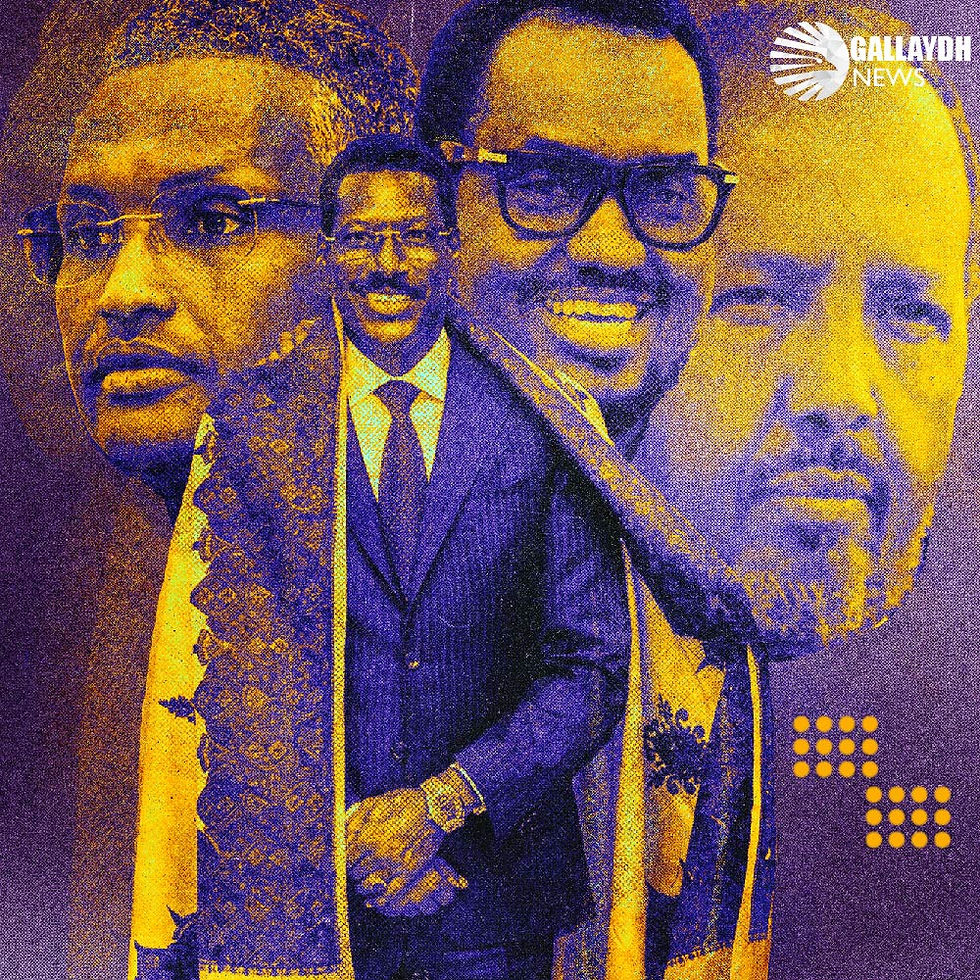
The Galkayo Standoff and Hassan Sheikhs Tour of Galmudug

GALKAYO (August 19, 2026) The central Somali city of Galkayo has been plunged into a tense military and political lockdown. This unprecedented crisis was triggered by the simultaneous presence of Somali Federal President Hassan Sheikh Mohamud in the city's southern district and Puntland State President Said Abdullahi Deni in the heavily militarized north.
Galkayo, a city historically bisected by the border between the Galmudug and Puntland administrations, has now transformed into the literal front line of a deepening political and security rift between the federal government in Mogadishu and the regional leadership in Garowe. The physical presence of both leaders on opposite sides of the city has brought civilian movement across the border to a complete standstill, raising fears of an imminent military confrontation.

The Presidential Tour and Villa Somalia’s Message
President Hassan Sheikh Mohamud's arrival in South Galkayo on August 19 is part of a broader overland tour of the Galmudug State that began on August 17. Accompanied by Galmudug President Ahmed Abdi Karie, locally known as Qoor-Qoor, the federal delegation was warmly received by hundreds of residents during previous stops in the major towns of Dhusamareeb, Adado, and Bandiiradley.
Spending his second night in the southern half of Galkayo, President Mohamud attended a state luncheon where he delivered a message heavily focused on peace, unity, and national progress. He outlined his administration's achievements, specifically highlighting the ongoing military offensive against the Al-Shabaab insurgency, the finalization of the provisional constitution, and the federal government's ambitious blueprint to implement universal suffrage. He urged the residents of the Mudug region to stand behind these national agendas.
However, regional political analysts view the tour through a more strategic lens. The visit is widely interpreted as a dual-purpose mission aimed at consolidating local armed forces for the next phase of the anti-insurgency campaign while simultaneously mobilizing political support ahead of the highly anticipated Galmudug regional elections.
A City Split in Two: Puntland’s Military Lockdown
While South Galkayo celebrated the arrival of the federal delegation, North Galkayo adopted a war footing under the direct command of Puntland President Said Abdullahi Deni. The Puntland administration has drastically tightened security on its side of the border, placing all armed forces on high alert and barricading crossing points.
The government in Garowe issued a stern preemptive warning against President Mohamud's visit. In a sharply worded official statement, the Puntland Presidency accused the federal leader of orchestrating a hostile mobilization campaign against its territories. Puntland officials argued that the tour was a deliberate provocation designed to incite public unrest and instability in a city that is only just recovering from a history of devastating communal violence.
To consolidate his defenses, President Deni convened an emergency security briefing at the Puntland Presidential Palace in Galkayo on the eve of the federal delegation's arrival. The meeting, attended by top military commanders and regional officials, focused on securing the volatile districts of Saaxo, Galkayo, and Galdogob. The immediate acceleration of troop reorganizations in these areas signaled a clear military readiness to counter any perceived incursions from the south.
A War of Words: Accusations of Treason and Geopolitical Rivalries
Puntland’s warnings were met with swift and furious pushback from the Federal Government. Somali Defense Minister Ahmed Moalim Fiqi outright dismissed Deni's statements as baseless political theater that contributed nothing to the national discourse. The Defense Minister firmly asserted that the President of the Republic possesses the constitutional right to travel anywhere within Somalia's borders, adding that President Mohamud is a guest of the Galmudug State, not Puntland.
Taking the rhetoric to unprecedented heights, Minister Fiqi published a scathing public statement leveling accusations of high treason against the Puntland President.
"Deni has aligned himself against Somalia with foreign adversaries, supported the dismemberment of the country, and enabled the enemy's massacre of our brothers in Sudan," Fiqi declared.
These explosive allegations carry profound geopolitical weight. They indirectly highlight Puntland's continued cultivation of independent economic and security relationships with Ethiopia and the United Arab Emirates. Mogadishu currently views both nations with deep suspicion due to severe diplomatic disputes concerning maritime sovereignty in the Horn of Africa and broader regional interference.
The Catalyst: Southern Arms and the Fall of the PSF
The militarization and palpable fear gripping Galkayo today are not merely the result of political rhetoric. They are the direct fallout of deadly clashes that rocked the Mudug region earlier this month.
The current crisis ignited on August 4 when a clandestine shipment of weapons arrived in South Galkayo. Puntland authorities alleged that Villa Somalia smuggled the arms into the region to supply rebel militias operating within Puntland’s borders in an attempt to topple Deni’s administration. The weapons ultimately fell into the hands of local clan militias, sparking a fierce firefight that resulted in numerous casualties.
The following day, Puntland state forces launched a massive retaliatory offensive. They besieged and stormed military bases in North Galkayo belonging to the Puntland Security Force (PSF), an elite unit widely believed to be receiving financial and political backing from the Federal Government. Following intense combat, Puntland fully captured the installations, effectively purging the north of any parallel, federally-aligned military presence.
Conclusion
The simultaneous presence of President Hassan Sheikh Mohamud in South Galkayo and President Said Abdullahi Deni in North Galkayo perfectly illustrates the severe fragmentation of the Somali state. What began as a bitter dispute over constitutional amendments, electoral models, and power-sharing has now mutated into a direct, localized military standoff.
The suspension of civilian movement and the rapid massing of troops on both sides of the city serve as a grim indicator that the political estrangement between Mogadishu and Garowe threatens the hard-won peace of central Somalia. While the political elites trade accusations of treason and provocation across a fortified border, it is the residents of the Mudug region who are left bracing for the catastrophic consequences of this escalating crisis.