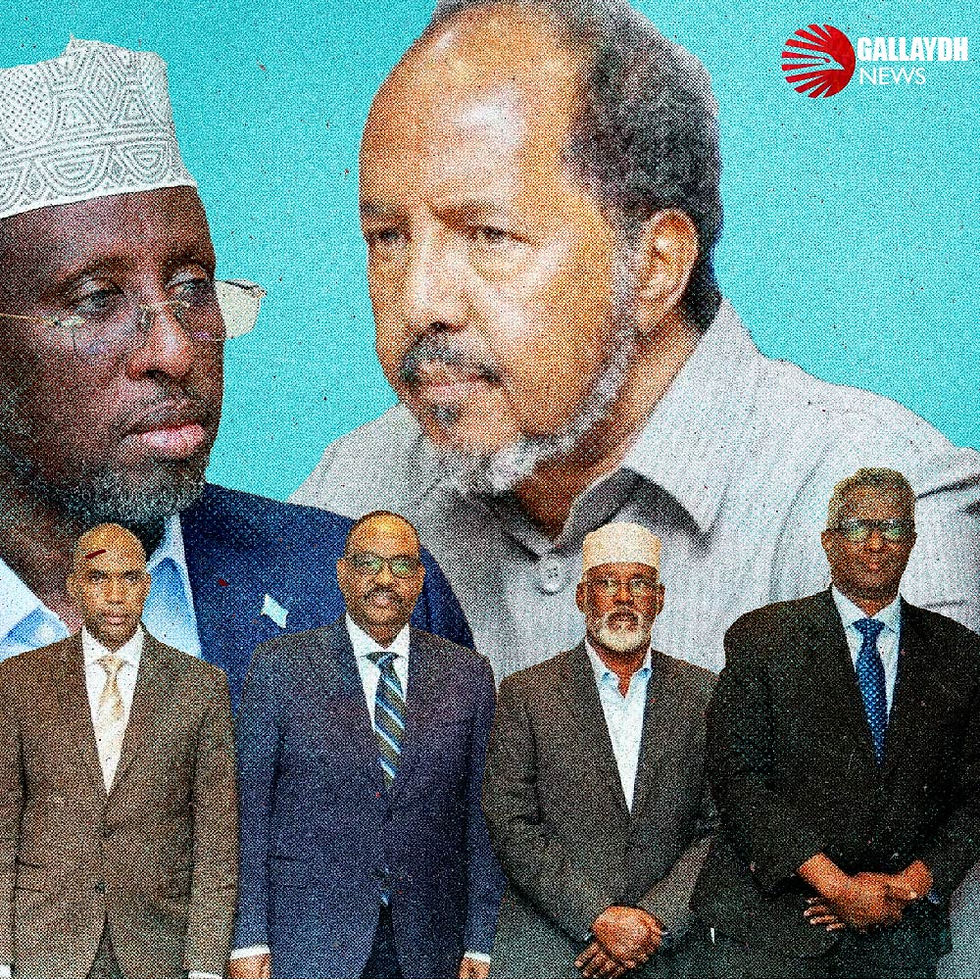
The Brink of May 15: Somalia’s High Stakes Electoral Showdown and the Mirage of Universal Suffrage

With the clock mercilessly ticking toward May 15, Somalia finds itself staring into the familiar abyss of a constitutional crisis. President Hassan Sheikh Mohamud has summoned the nation’s political elite to Mogadishu for a high stakes summit on May 10. The objective is ostensibly to forge a consensus on the country’s electoral future. However, with the opposition vehemently arguing that the current administration's mandate expires exactly five days after the talks begin, the summit is less a proactive planning session and more a frantic attempt to defuse a political time bomb.
The standoff pits President Mohamud’s unilateral drive for universal suffrage against a formidable coalition of former presidents, prime ministers, and regional leaders who view his democratization agenda as a thinly veiled mechanism for an unconstitutional term extension. As Mogadishu braces for the May 10 talks, the prospect of a genuine compromise seems elusive, yet the alternative is a return to the political violence that has historically plagued the Horn of Africa nation.

The President’s Unyielding Gambit
President Hassan Sheikh Mohamud’s tenure has been defined by an ambitious, if highly controversial, push to overhaul Somalia’s political architecture. He has aggressively championed a transition from the complex, clan based indirect electoral system to a One Person, One Vote (1P1V) model. Furthermore, he has pushed through constitutional amendments to shift the country toward a presidential system, dismantling the power sharing prime ministerial role.
On paper, universal suffrage is a noble democratic ideal. In the reality of Somalia's current security and institutional landscape, it is an administrative impossibility within the current timeframe. Al Shabaab still controls vast swaths of the hinterlands, civil registry systems are virtually non existent, and federal member states are deeply divided.
The opposition recognizes that insisting on 1P1V inherently requires a massive delay in the electoral timeline. For President Mohamud, compromising on this front means admitting defeat on his legacy project. His posture leading up to the May 10 talks has been resolute, framing the opposition as anti democratic forces clinging to an archaic clan system. However, this intransigence sets a dangerous stage. Going into the talks, the President appears unwilling to accept any model that forces him to face the electorate immediately, relying instead on the argument that the nation must wait until the institutions for universal suffrage are ready.
The May 10 Talks: Political Theater or Genuine Breakthrough?
The dynamic of the upcoming summit is heavily skewed by the ticking clock. The opposition coalition, operating under the banner of the Future of Somalia Council, arrives with a massive leverage point: the May 15 expiration of the President's four year term.
The opposition will likely approach the May 10 talks not to debate the merits of universal suffrage, but to negotiate the terms of a transitional period. They are fully aware that holding any election, even an indirect one, before May 15 is now mathematically impossible.
Therefore, the talks will immediately center on what happens on May 16. If President Mohamud refuses to yield his 1P1V ambitions, the opposition will likely declare his government illegitimate, potentially establishing a parallel transitional council. This would fracture the Somali security forces along clan lines, a scenario that played out with devastating consequences during the 2021 term extension crisis.
Anatomy of the Opposition: Profiles in Pragmatism and Red Lines
To understand where a compromise might be found, one must dissect the opposition. They are not a monolith; they are a coalition of rivals united primarily by their mutual distrust of the incumbent. Each key figure brings specific red lines and potential areas of flexibility.
Said Abdullahi Deni: The Federal Firewall
As the President of Puntland, Deni has been the most consistent thorn in Mohamud’s side, previously boycotting the National Consultative Council meetings. Deni is a staunch defender of federalism and views the President's constitutional changes as an existential threat to regional autonomy. His Compromise: Deni has zero interest in Mohamud’s 1P1V plan, as it bypasses the regional leaders' ability to control outcomes. However, Deni is a pragmatist. He would likely agree to a "technical extension" of Mohamud’s term (perhaps six to nine months) on one strict condition: the immediate abandonment of universal suffrage in favor of a return to the indirect, regional based electoral model where Federal Member States wield the real power.
Mohamed Abdullahi Farmajo: The Populist
The former President finds himself in an ironic position. In 2021, Farmajo attempted his own controversial term extension under the guise of organizing 1P1V elections, an effort that brought Mogadishu to the brink of civil war. Now, he is the loudest voice demanding adherence to term limits. Farmajo retains significant populist support and a loyal base within certain security sectors.
His Compromise: Farmajo deeply distrusts Mohamud's institutional reforms. He is unlikely to accept any prolonged extension. However, to avoid being blamed for state collapse, Farmajo might accept a short, strictly defined postponement to organize an indirect election, provided Mohamud agrees to step down or transfer executive authority to a neutral caretaker prime minister during the transition.
Sheikh Sharif Sheikh Ahmed: The Conciliator
Often viewed as the father of Somalia’s modern transitional governments, Sheikh Sharif carries immense moral authority. He is less of a political brawler than Farmajo or Deni and focuses heavily on national consensus and stability.
His Compromise: Sharif is the most likely to bridge the gap. He fundamentally opposes unilateral mandate extensions but understands the logistical reality that elections cannot happen overnight. Sharif would likely sponsor a compromise that allows Mohamud to remain in office in a heavily diluted capacity while a newly appointed, consensus based electoral commission organizes an indirect vote. Sharif’s primary demand will be that Mohamud publicly retracts his unilateral constitutional amendments.
Hassan Ali Khaire: The Strategist
The former Prime Minister is a technocrat and a master of Somalia’s complex clan arithmetic. Khaire’s political machinery is built for the traditional 4.5 power sharing model. He knows that universal suffrage neutralizes his network of clan elders and regional brokers.
His Compromise: Khaire is highly motivated to get to the ballot box as quickly as possible. He will push the hardest against 1P1V. Khaire would willingly concede a short term delay in the election date if Mohamud formally reinstates the indirect model, as Khaire believes he has the upper hand in a traditional delegate based system.
The Nexus of Compromise: The "Indirect" Trade off
Given the entrenched positions, what is the most plausible outcome of the May 10 talks? A zero sum game will lead to violence, a reality that the international community, major donors, and Somali civil society are frantically reminding both sides.
The only viable off ramp requires a painful concession from President Mohamud. He must sacrifice his legacy project of universal suffrage, at least for this electoral cycle. The opposition's firm stance on the May 15 deadline is their strongest negotiating card, but it is also a flexible one if their core demand is met.
The likely compromise will resemble the political settlements of the past. The opposition will agree to temporarily suspend their May 15 deadline, granting the government a "technical extension" of up to a year. In exchange, President Mohamud must officially discard the 1P1V model and agree to a finalized, transparent timeline for indirect elections based on the previous clan delegate system. Furthermore, the opposition will demand that the recent unilateral constitutional changes regarding the presidential system be frozen or reversed.
If President Mohamud approaches the May 10 summit viewing it merely as a platform to lecture the opposition on the virtues of democratization, the talks will collapse before they begin. But if he approaches the table with the sobering realization that an imperfect, indirect election is preferable to the collapse of the federal government, a deal can be struck. The opposition leaders are ready to grant him the time he needs, but only if he abandons the mechanism he hopes will keep him in power. The future of Somalia's fragile recovery now rests entirely on whether statesmanship can overcome political survival.