


31 Days : Farmaajo Confronts Villa Somalia with Constitutional Realities

MOGADISHU, Somalia (April 15, 2026) : The Federal Republic of Somalia is currently navigating a period of intense political turbulence that threatens to plunge the nation into an unprecedented legal and institutional crisis. While the administration of President Hassan Sheikh Mohamud (HSM) continues to assert that recently adopted constitutional amendments grant it a one-year mandate extension, the opposition, led by former President Mohamed Abdullahi Farmaajo, has vehemently rejected the legitimacy of this move, declaring that the country has officially entered a "Constitutional Vacuum."
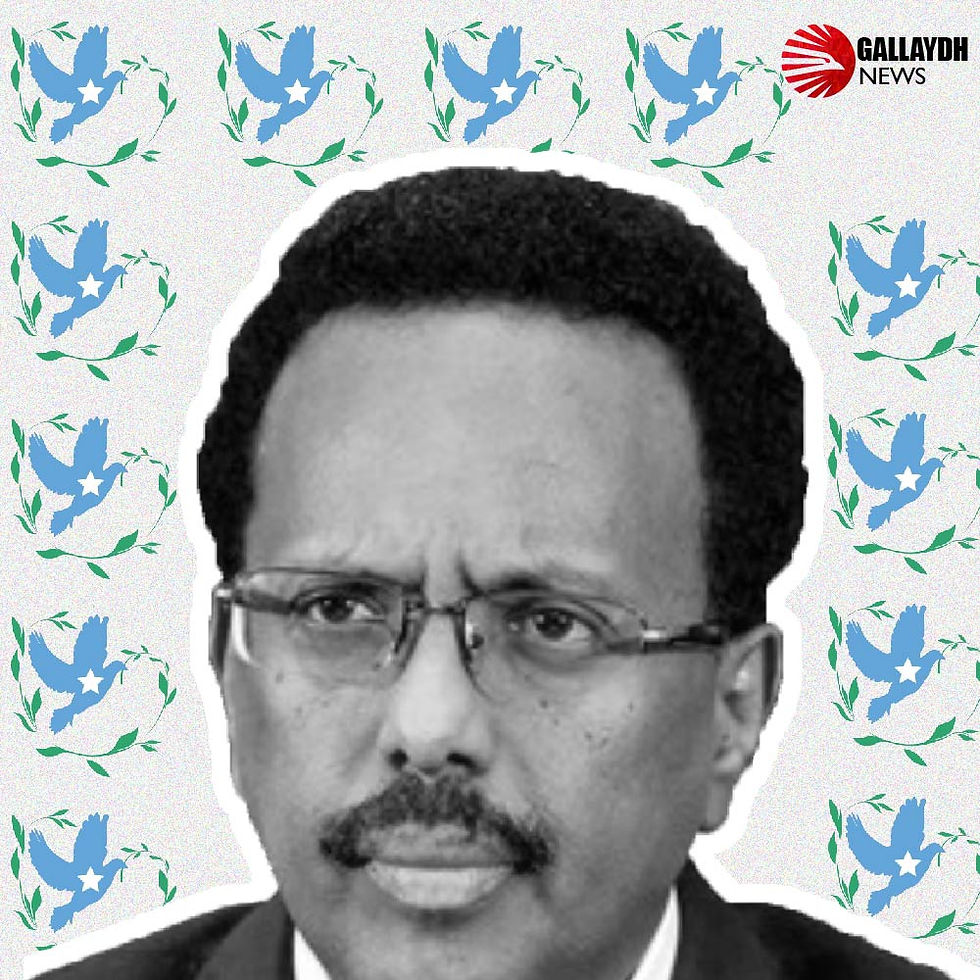
The Expiration of Parliament and the 31-Day Countdown
Yesterday, April 14, 2026, marked the official end of the four-year term for the 11th Federal Parliament of Somalia under the 2012 Provisional Constitution. Former President Mohamed Abdullahi Farmaajo issued a stern press release asserting that, as of today, the nation no longer possesses a legally constituted parliament to represent the people.
"The mandate of the Federal Parliament officially expired today, April 14, 2026, as strictly defined by the Provisional Constitution, particularly Article 60," Farmaajo stated.
He further emphasized the gravity of the situation by pointing to Article 91 of the constitution, noting that President Hassan Sheikh Mohamud has only 31 days remaining of his legal mandate, which is set to expire on May 15, 2026.
The Battle Over the Constitution: Reform or Power Consolidation?
At the heart of this confrontation are the controversial amendments to the initial chapters of the Somali Constitution, which were pushed through by both chambers of Parliament earlier this year. The current administration argues that these changes are necessary to transition Somalia toward a presidential system and facilitate "one-person, one-vote" elections, a process they claim requires additional time for technical preparation.
However, the opposition and several Federal Member States, most notably Puntland, view these amendments as a unilateral rewrite that dismantles the federal consensus upon which the Somali state was rebuilt. Because the new amendments extend the terms of government institutions from four to five years, the HSM administration believes it has secured a "bonus year" in office.
"Nabad iyo Nolol" and the Politics of Comparison
The Nabad iyo Nolol (Peace and Life) party has released a sharp analysis comparing the 2021 electoral crisis under Farmaajo with the current 2026 standoff. According to the party's official stance, when Farmaajo reached the five-month mark before the end of his term, he had secured:
A consensus-based electoral agreement (the September 17 Agreement).
A fully functioning National Consultative Council (NCC).
A transition schedule accepted by the majority of Federal Member States.
In contrast, they accuse the current administration of forcing through constitutional changes without inclusive dialogue among all political stakeholders, a move they claim is pushing the country toward security instability and a total constitutional breakdown.
The Danger of a Legal Vacuum and Security Implications
Legal experts are warning that the absence of a legitimate parliament means there is no sovereign body to approve the national budget, ratify international agreements, or provide oversight for the executive branch. This legal void provides a critical opening for anti-government elements, including Al-Shabaab, who often capitalize on divisions within the central government's senior leadership to expand their influence.
Farmaajo has called for an immediate and inclusive political settlement to rescue the nation from a "Constitutional Vacuum" that could lead to a total paralysis of state functions. "This critical stage requires a political agreement that leads to transparent and credible elections to prevent a crisis that threatens the stability of our governance," the former president urged.
Conclusion: What Lies Ahead for Somalia?
This constitutional impasse is more than a debate over legal terminology: it is a high-stakes test for the very existence of Somali statehood. If a political compromise is not reached before the May 15, 2026 deadline, the country faces an unpredictable and potentially volatile future.
President Hassan Sheikh Mohamud faces a stark choice: continue with the unilateral mandate extension anchored in the contested new constitution, or return to the consultative table to reach a consensus that includes the opposition and dissenting Federal Member States.
Do you believe Somalia can navigate this crisis without a major political collapse, or is this the beginning of a new era of fragmented and contested governance?


